
The Castel case: when succession becomes a struggle for power
What does the Castel case teach founders of African family businesses about preparing for succession?
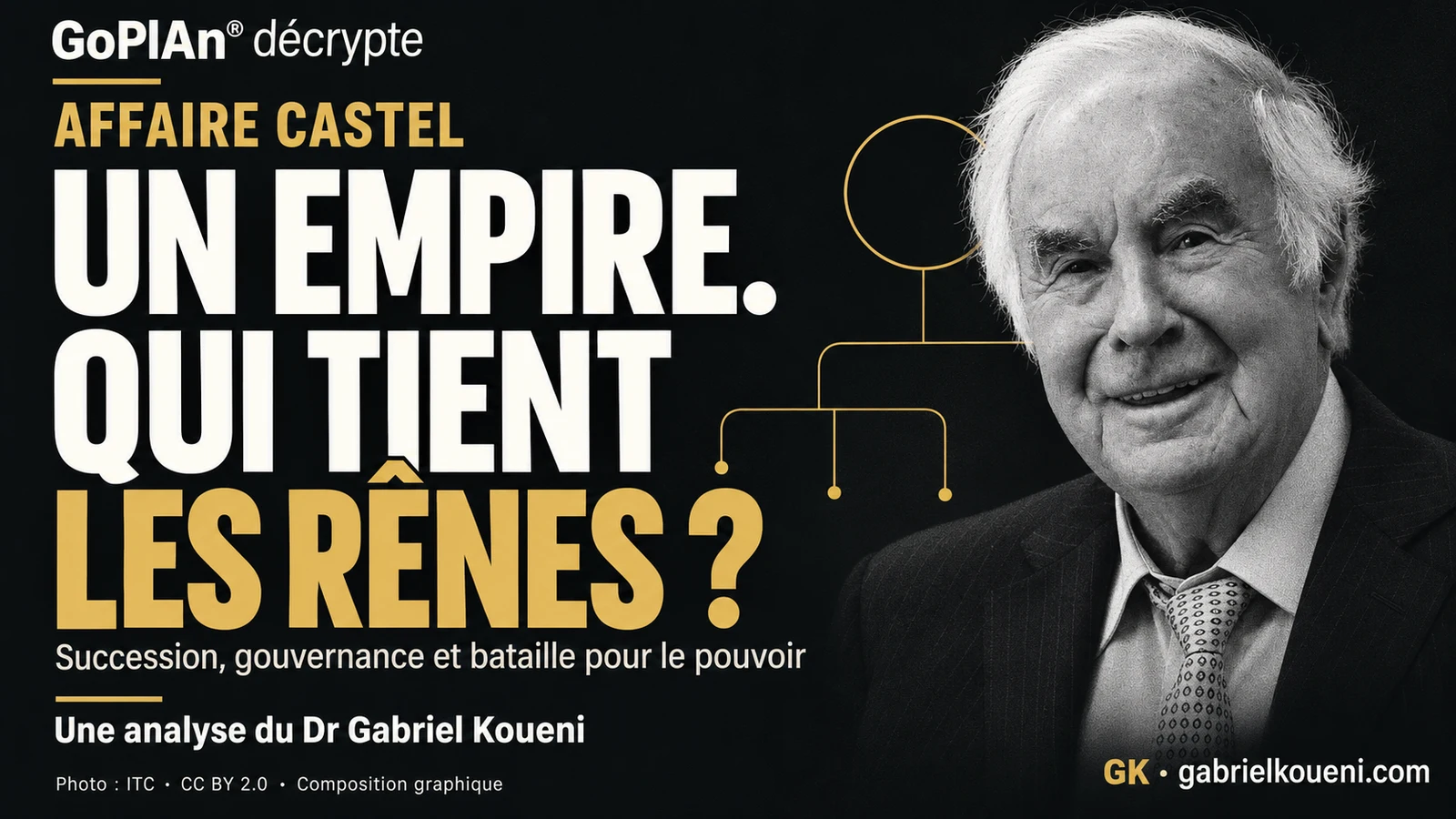
A hundred-year-old founder, an only daughter, a nephew and a chief executive the founder chose himself. Together they are part of a business empire that has expanded internationally and is now divided. The Castel case poses a question for anyone who has built a business and wants it to outlive them.
Pierre Castel and his brothers and sisters founded the group in Bordeaux in 1949. It went on to become a major international drinks business with a particularly strong presence in Africa. Today it faces a dispute over who should lead it.
According to press reports, the founder’s only daughter, Romy Castel, and his nephew, Alain Castel, challenge the leadership of Grégory Clerc. A former tax adviser to Pierre Castel, Clerc was appointed chief executive in October 2023. Other branches of the family support him. Court proceedings have multiplied, particularly in Singapore, and further removals from office were announced in early November 2026. The parties dispute each other’s allegations. It is for the courts to decide.
My concern is to understand how a business of this size could reach this point. As a researcher, my role is not to decide who is right.
In my work on family business succession in Cameroon, I have identified difficulties that recur in different forms across many family businesses.
Five lessons for business continuity
1. Building a business and preparing it to carry on are two different tasks.
A founder’s success does not guarantee a successful succession.
2. An heir is not necessarily a successor.
Family members’ rights to assets are distinct from the skills and responsibilities involved in leading the business.
3. Appointing a leader is not enough.
Even a leader chosen by the founder may face challenges to their legitimacy from members of the family. Their authority must be clear, and there must be a way to resolve disagreements.
4. The law cannot resolve every human conflict.
Arrangements for ownership and signed agreements can still leave room for disputes over power and legitimacy.
5. Founders must prepare for their departure during their lifetime.
At Castel the founder is a hundred years old and still present, yet conflict has already broken out. Families must prepare for the day when the founder’s personal authority can no longer settle disagreements between relatives and executives, whether because the founder has stepped back or can no longer intervene.
Governance, planning and anticipation
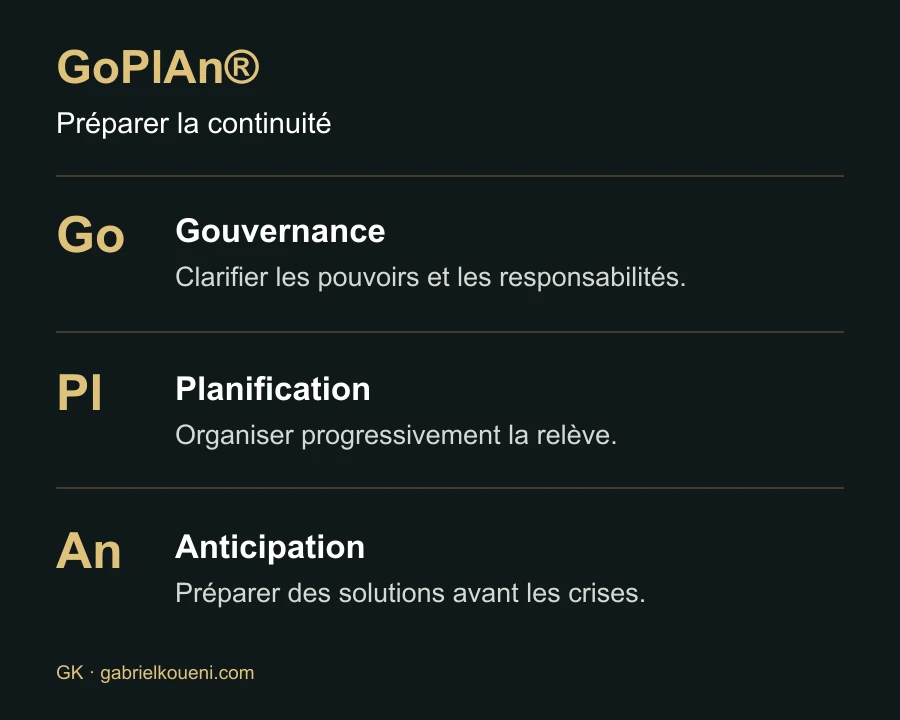
I developed GoPlAn® to address these difficulties. It is a framework for assessment and support built on three pillars. Governance clarifies powers and responsibilities. Planning prepares the next generation to take over in stages. Anticipation helps prevent disputes and prepares solutions before a crisis.
The realities of African family businesses
These questions carry particular weight in Africa. The business is often seen as belonging to the entire family, with the founder responsible for protecting it. Extended families, sometimes polygamous, matrimonial property regimes and the coexistence of modern and customary law add further complexity. Several sets of rules may claim to govern the same succession.
A succession can be legally settled without being accepted by the people involved.
Founders, if you were no longer there tomorrow to settle disagreements, could your business carry on smoothly? If you would like to discuss how well prepared your own business is, send me a private message.
“A person is born, lives and dies. A business is born, lives and must endure.”
Dr Gabriel Koueni, author of the GoPlAn® framework
Talk to Dr Gabriel Koueni about preparing your business for succession
Background and sources
EcoMatin · Removals from office announced on 3 November 2026
High Court of Singapore · Judgment of 25 September 2026, SGHC 197
Photograph · International Trade Centre, via Wikimedia Commons

Text by Dr Gabriel Koueni. Photograph by the International Trade Centre (CC BY 2.0). Editorial design by Agence Malika.
Discussion
Be the first to share your thoughts.